
The Complete Habitat Conservation Plan Definition Guide
Habitat Conservation Plan Definition: Balancing the demands of modern development with the fragility of our ecosystems is perhaps one of the most complex tightropes a landowner or developer can walk. If you are looking to develop land that is home to protected wildlife, you have likely hit a regulatory wall known as the Endangered Species Act (ESA).
You aren’t just looking for legal jargon; you are looking for a roadmap. In this guide, we will break down the official Habitat Conservation Plan definition, unpack the nuance of the process, and explore how this document serves as the critical bridge between breaking ground and preserving nature.
What Is the Official Habitat Conservation Plan Definition?
Let’s cut through the noise and get straight to the core concept.
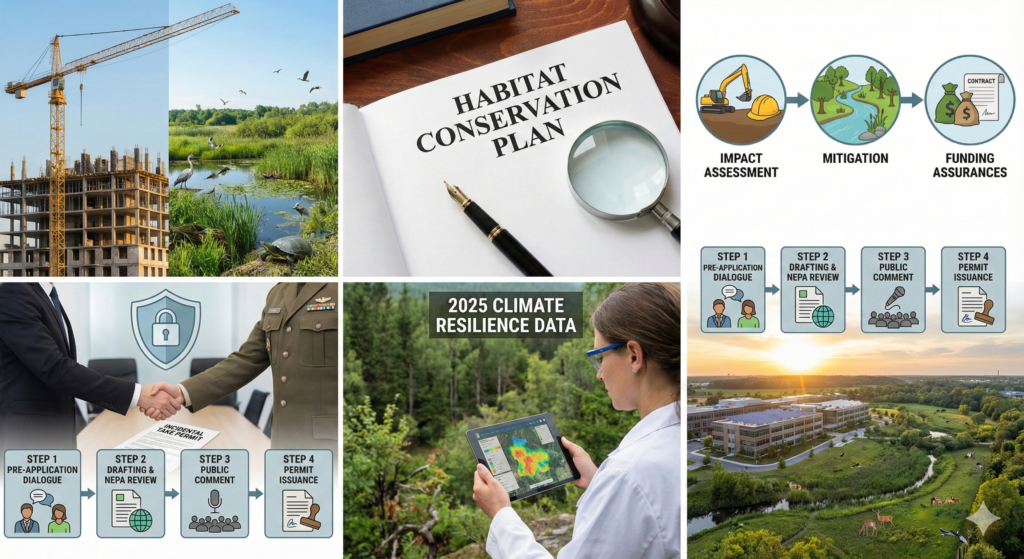
A Habitat Conservation Plan (HCP) is a mandatory planning document that is part of an application for an “Incidental Take Permit”. This is required under Section 10(a)(1)(B) of the Endangered Species Act when a non-federal project—like building a subdivision, a wind farm, or a highway—might accidentally harm a listed species.
To put the Habitat Conservation Plan definition into perspective, think of it as a comprehensive compromise contract.
The federal government acknowledges that development needs to happen. The HCP is your way of saying, “I acknowledge my project will affect this habitat, but here is a legally binding blueprint of how I will minimise that harm and pay to fix what cannot be avoided.”
It transforms a potential legal deadlock into a manageable, albeit rigorous, process.
Core Components: The Anatomy of a Smart HCP
Habitat Conservation Plan Definition: Writing an HCP isn’t about filling out a generic form; it requires a tailored strategy. To satisfy the U.S. Fish and Wildlife Service (USFWS) or NOAA Fisheries, your plan must contain “unique” and robust elements.
Here is what a solid plan actually looks like:
- The Impact Assessment: You must quantify the “take”. This doesn’t just mean counting animals; it means calculating the exact acreage of habitat modification that will occur.
- The Mitigation Hierarchy: This is the heart of the plan.
- Avoid: Can you move the road to save the nest?
- Minimise: Can you limit construction noise during breeding season?
- Mitigate: If damage is unavoidable, how will you offset it? (e.g., buying conservation credits or restoring land nearby).
- Funding Assurances: This is often where plans fail. You must prove you have the liquid capital to fund the conservation efforts for the life of the permit. Promises aren’t enough; financial guarantees are required.
- Adaptive Management: Nature is unpredictable. Your plan must include protocols for what happens if the mitigation strategies don’t work as expected. It’s a built-in “Plan B”.

The “No Surprises” Rule: Why Developers Should Care
If you take only one thing away from this guide, let it be the “No Surprises” Rule. This is the hidden gem within the regulations that makes the headache of an HCP worth it.
Once your HCP is approved and the permit is issued, the government provides you with regulatory certainty.
If the status of the species changes, or if unforeseen circumstances arise years down the road, the government generally cannot require you to provide additional land or money beyond what was agreed upon in the original plan. It essentially “grandfathers” your project against future regulatory shifts. For investors looking at 10- or 20-year timelines, this assurance is invaluable.
Navigating the Process: A Timeline of Patience
Creating an HCP is not an overnight task. It is a marathon that typically follows these phases:
- Pre-Application Dialogue: Before writing a single word, smart developers sit down with the Services (USFWS/NOAA) to discuss the scope. This aligns expectations early.
- Drafting and NEPA Review: You draft the plan, but it must also undergo a National Environmental Policy Act (NEPA) review. This often involves an environmental assessment or a full environmental impact statement.
- Public Comment: Transparency is key. Your plan will be published for public scrutiny. This is where having a robust, scientifically backed plan protects you from opposition.
- Permit Issuance: Once the biological opinion is favourable and the plan is deemed sufficient, the Incidental Take Permit is signed.(Habitat Conservation Plan Definition)
Recent Updates: The 2024-2025 Landscape
The regulatory environment is living and breathing, much like the species it protects. As of late 2025, we are seeing a shift toward more stringent requirements for climate resilience in HCPs.
Regulators are increasingly asking: Does this Habitat Conservation Plan definition of mitigation account for climate change over the next 50 years?
Modern plans are now expected to be more data-driven than ever, utilising advanced GIS mapping and biological modelling. Relying on outdated templates from the early 2000s is the fastest way to get your application rejected in today’s climate.

Conclusion: Turning Red Tape into Green Light
Understanding the Habitat Conservation Plan definition is the first step in a complex journey. While the process requires significant time, capital, and patience, the result is a legally secure pathway to develop land that would otherwise be untouchable.
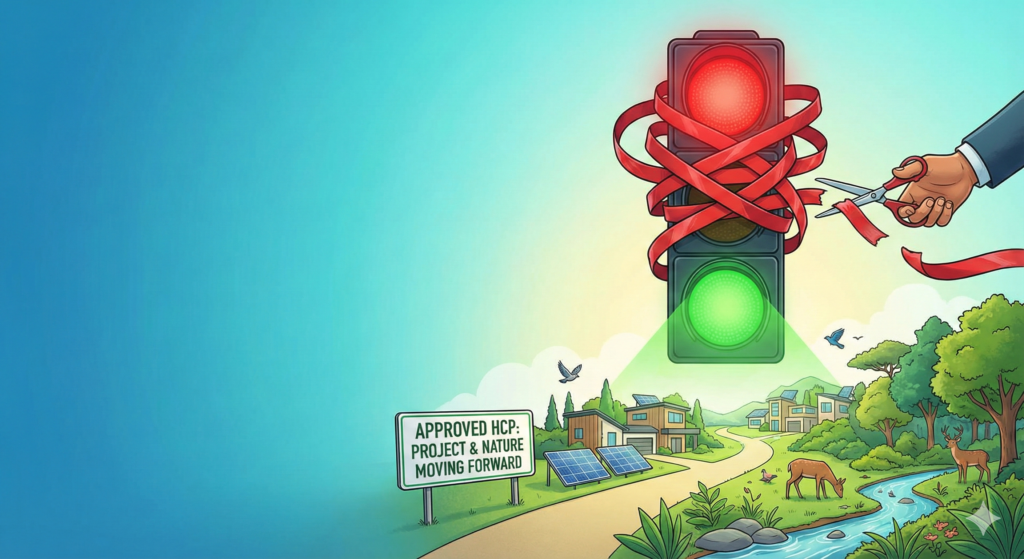
An HCP allows you to move forward with confidence, knowing you have safeguarded both your project’s future and the ecosystem it inhabits.
1 thought on “The Complete Habitat Conservation Plan Definition Guide”